
February is soup season in Maine; with all due respect to San Francisco in the summer, it can get pretty cold here. Our very favorite cold weather soup is an ancient recipe from Rome that includes bread, egg, cheese, and garlic in chicken stock. When it’s done right, it’s not even a soup really — it’s so thick that each spoonful will crown over the spoon edge. The garlic opens your often stuffy nasal passages, and the egg and bread fill you right up. There’s nothing better to be eaten in front of a roaring fire on a dark winter night. The recipe we normally use is from a 1993 SF Chronicle article by Carol Field who calls it “Pancotto.” However, there’s another good recipe in The Frugal Gourmet Cooks Three Ancient Cuisines where Jeff Smith traces a bit of the history of the soup, and then offers a version that makes “rags” out of semolina, eggs, and grated cheese that are cooked in the broth just before being served. Either way, you can’t go wrong when you’re looking for a quick filling way to warm up.
February is also Maine shrimp (Pandalus borealis) season, when this smallish species (averaging 30 to 60 pieces to a pound in the conventional shrimp meat measurement) of comes south for the winter from its summer home in the Arctic ocean. The nice thing about buying these shrimp in season is that you can often buy them directly from the fishermen, who sit in pick-up trucks just off Route 1 (the coastal State highway) propping up hand-lettered signs advertising their catch. And, believe it or not, these days the shrimp, often less than 24 hours out of the net, cost $1.00 or less a pound (the best I got this winter were $0.75 a pound)! That’s in the shell, but you can get more than a pound of tail meat from two pounds of shrimp, and that’s a very nice meal for two to four people. The remaining shells make this deal even better because the heads and shells contain lots of flavor of their own (and often the shells also include eggs stuck to the legs because the shrimp breed at this time, and the roe offer even more rich fat and flavor), and you can make some serious shrimp stock for poaching other fish, or as a base for sauces or soups.
Continue reading →

 Rhubarb is finally plentiful in the East (I’m sure it’s been in the West Coast farmers’ markets for a while now), and it’s a great mark of the seasons change from Spring to Summer. Real rhubarb (grown in a garden or field, not forced in hot houses as the year-round stuff is) is a sharp tangy taste of spring sunshine and cold rain. Classically it makes a great pie — more complex than sour cherries in my opinion — but can pair well with meats, especially pork. Next time you brine a pork loin before roasting, try adding a couple of stalks (chopped) of rhubarb to the brine; you will not be disappointed.
 Chinese dumplings (part of dim sum meals) are easy! If I sound a bit like the Frugal Gourmet by loudly announcing this, it may be because Jeff Smith has gone a long way to proving this to me. And I’m not just talking about buying wonton or gyoza wrappers at the store and filling them with a ground pork mixture, I’m also referring to the act of making the dumpling wrapper dough, which is no more complicated than making fresh pasta — maybe even easier (because you don’t have to cut it to ribbons). It’s certainly easier than making gnocchi because you don’t have to boil potatoes ahead of time.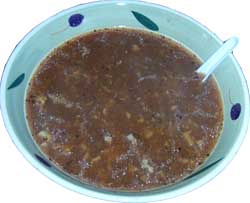

 MARC’S SPAGHETTI SAUCE

 eats for one